

Modern Stairs Plus designs, fabricates, and installs custom steel fire escape stairs for properties across Toronto and the Greater Toronto Area. Projects can include replacement stair flights, exterior landings, handrails, and guardrails, with the scope developed around the building, site conditions, and applicable approval requirements.
Whether you are planning to replace an aging structure or exploring an exterior exit stair as part of a renovation, the first step is understanding the property’s requirements. The stair layout, supporting structure, access points, and route to ground level need to be considered together before fabrication begins.
An exterior stair used for emergency egress forms part of a larger exit arrangement. Its usefulness depends on more than the stair flight itself: people must be able to reach it, move through the connecting doors and landings, and continue along a suitable route after reaching the ground.
The terms “fire escape” and “exterior exit stair” are often used interchangeably in everyday conversation, but the applicable requirements may differ. The appropriate solution depends on the building and the proposed work. A photograph of a staircase on another property is a design reference, rather than confirmation that the same arrangement is suitable for your project.
For an existing building, provide any available drawings, inspection reports, or notices with your initial inquiry. These documents can help clarify the reason for the work and identify questions that need to be resolved before pricing and fabrication.
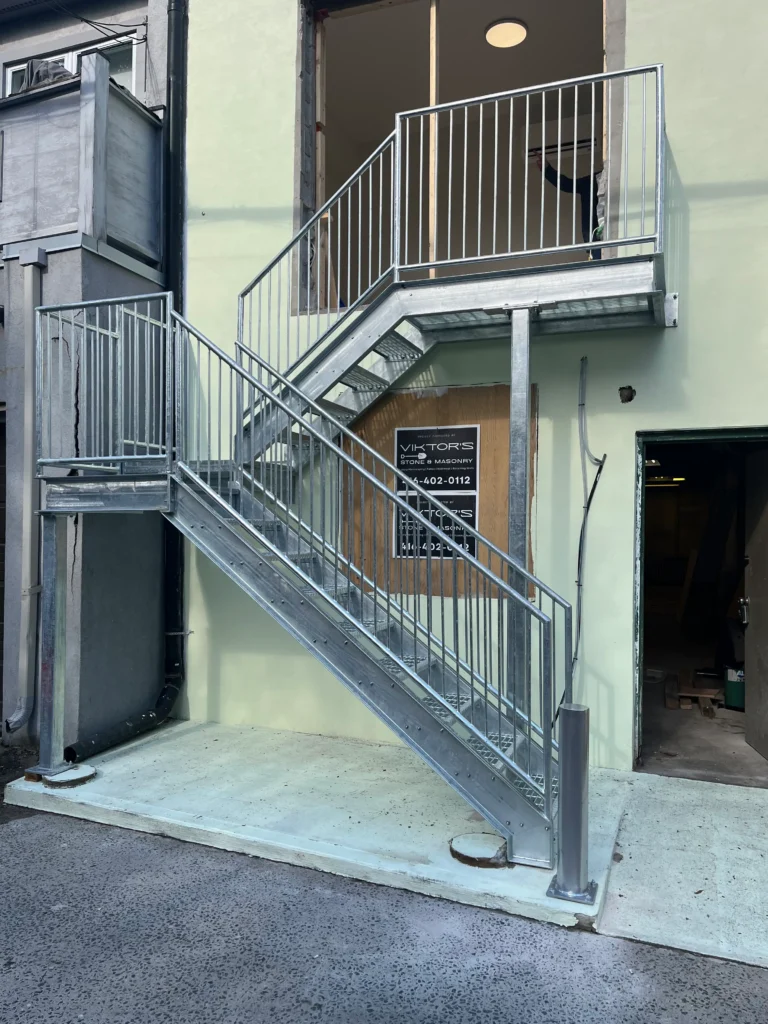
Replacing an Existing Fire Escape
Replacing an older fire escape begins with reviewing the condition and configuration of the existing structure. The stair flights, landings, connections, and supporting elements all need consideration. Visible rust alone does not establish whether a structure needs repair or complete replacement; the extent of deterioration requires assessment.
A replacement project should also account for removal, access for installation equipment, and any work needed at the building connection points. Where the stair serves an occupied property, maintaining appropriate exit arrangements during construction must be addressed before removal starts.
Exterior Stairs for Renovations
A renovation or change in building use may prompt a review of the exit arrangement. An exterior steel stair may be considered as part of that review, subject to the design and approval requirements for the property.
Available space, door locations, neighbouring buildings, and the route at ground level can influence what is possible. Confirming these constraints early helps avoid developing a stair design that cannot be accommodated on the site. Explore our exterior metal stairs for examples of outdoor stair layouts and finish options.
Steel allows stair flights, landings, and railings to be fabricated to suit a specific layout. The completed assembly needs a coordinated design, including its supports and connections. Material selection should therefore be considered alongside the structural requirements and outdoor exposure.
Protective finish options may include hot-dip galvanizing or a specified coating system. Discuss the proposed finish, preparation requirements, appearance, and future maintenance as part of the quotation. No exterior finish removes the need to monitor the condition of the stairs over time.
Tread and landing surfaces also require careful selection. Their suitability should be assessed for the intended use and exposure, including drainage and winter conditions. Surface texture alone does not eliminate the need to manage snow and ice.
Stair Layout and Landings
The arrangement of stair flights and landings must work with the building’s access points and the available site area. A straight flight and a layout that changes direction will have different space and support requirements.
Landing positions, door swings, clearances, and the transition to ground level should be resolved together. These details influence both the fabrication scope and how the completed stair connects with the property.
Supports and Building Connections
A steel staircase may use independent supports, connections to the building, or a combination established by the design. Existing masonry, concrete, or framing should not be assumed suitable for new attachments without assessment.
Clarify whether foundations, structural alterations, or repairs at attachment locations are included in the project. Identifying this work before fabrication helps keep the quotation and installation plan realistic.
Handrails and Guardrails
Handrails and guardrails have different functions and should be designed as part of the complete stair assembly. Their arrangement, dimensions, openings, and attachment details must suit the applicable project requirements.
The design should also consider transitions at landings and the relationship between railings and nearby doors or walls. Consistent detailing helps produce a coordinated finished structure.
Before construction, confirm the applicable building permit, design, and inspection requirements with the local municipality and the qualified professionals responsible for the project. Requirements depend on the building, its use, and the nature of the proposed work.
The project scope should identify who is responsible for drawings, engineering where required, permit submissions, and inspection coordination. A contractor’s completion walkthrough does not replace any required municipal inspection or professional review.
For properties outside Toronto, consult the municipality where the building is located. Approval arrangements for one project should not be assumed to apply to another.
For projects in Toronto, review the City of Toronto’s building permit guidance and confirm the requirements for your property with Toronto Building.
Site Information and Assessment
Start by sharing the property address, photographs, approximate dimensions, and a description of the proposed work. Let us know whether the project involves an existing fire escape, a new exterior stair, or changes associated with a renovation.
Site assessment helps establish the available space, access conditions, and fabrication requirements. Existing drawings and relevant inspection documents can make this stage more productive.
Scope, Design, and Estimate
The proposal should describe the stair flights, landings, railings, finish, delivery, and installation included in the price. Removal, foundations, building repairs, and professional services should be clearly identified as included or separate.
Final dimensions and the necessary design and approval arrangements should be resolved before fabrication. This reduces the likelihood of changes after components have been manufactured.
Fabrication and Installation
Fabrication follows the confirmed project details. Installation planning then considers delivery access, lifting requirements, work areas, and coordination with other contractors or building occupants.
The schedule depends on the project’s size, design, approvals, finish, and site conditions. Confirm the expected sequence and any access restrictions before work begins.


The height of the building, number of stair flights, landing arrangement, and amount of steelwork all affect the estimate. Supporting structures, foundations, protective finishes, removal of existing stairs, and equipment access can also change the overall cost.
Compare quotations by their included scope rather than the total alone. A lower figure may exclude preparation, removal, drawings, or other work needed to complete the project. Photographs and approximate measurements help start the pricing discussion, while a firm quotation requires a defined scope.
Exterior stairs and exit routes need ongoing attention after installation. Keep the route clear of stored items, debris, snow, and ice. Watch for loose components, damaged treads, coating deterioration, and changes at connections or supports.
Arrange maintenance and professional assessment appropriate to the structure and any applicable requirements. Painting over corrosion is not a substitute for assessing possible structural deterioration. Report concerns promptly and have any necessary repairs planned by suitably qualified professionals.
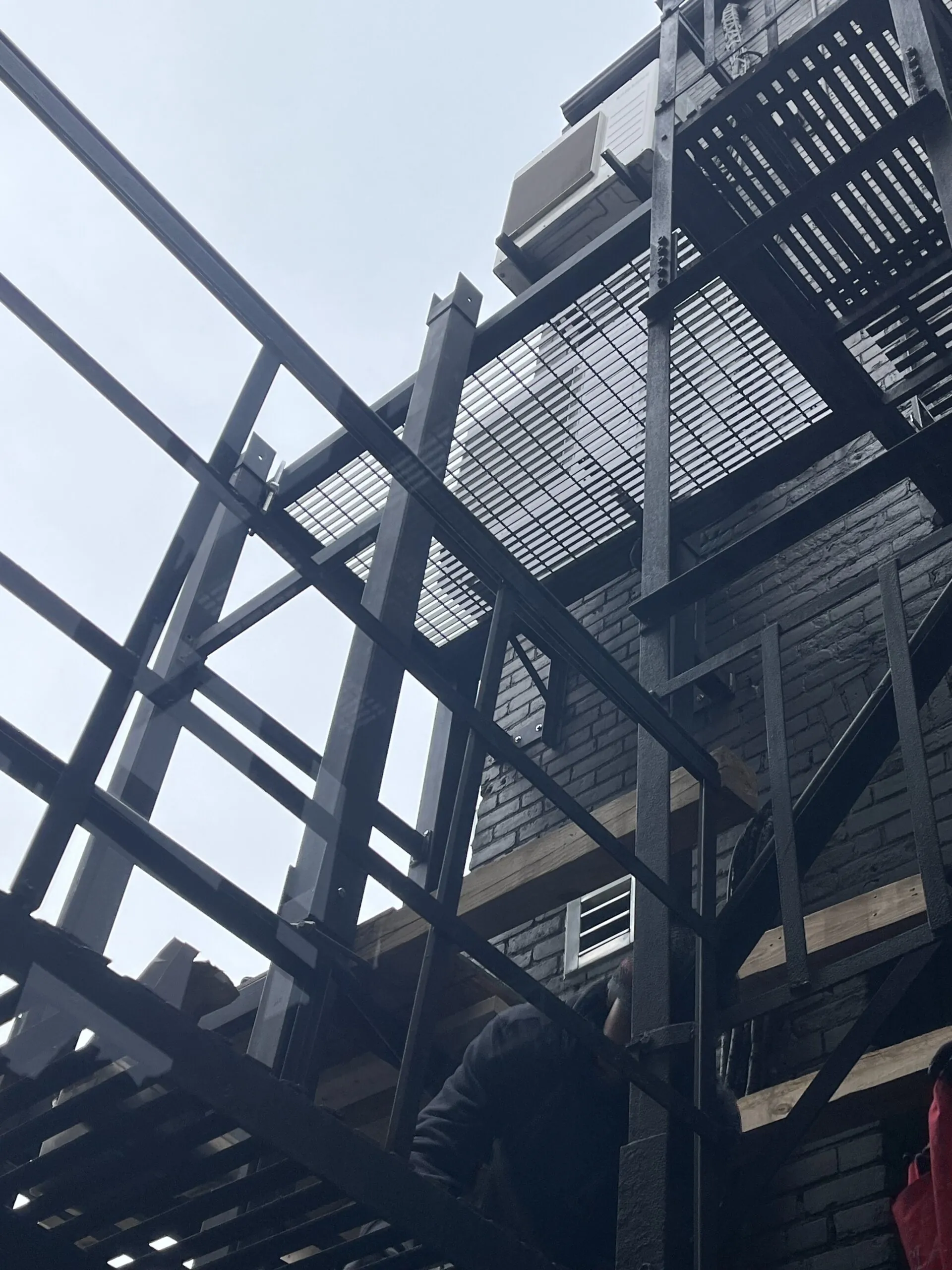
Modern Stairs Plus provides custom steel fire escape stair fabrication and installation for properties across Toronto and the GTA. Share your property location, photographs, approximate measurements, and any available drawings or inspection documents to help us understand the proposed work, including stair layout, landings, railings, and finishes.
For a free estimate, call 647-568-6350 or contact Modern Stairs Plus. We can review your project information and discuss the next steps.
Tell us where your project is located, what you would like to install and whether it involves a renovation or new build. Include approximate dimensions and your preferred style, if available. We’ll review your enquiry and discuss the next steps.Call 647-568-6350 or complete the form to request a free estimate.
Сreated by GTA Website Design


